Chambers at Large in Munnar & Thekkady, Kerala, India
Updated: Mar 4
Munnar is a region of Kerala about 1600m above sea level and is gloriously scenic, with deep valleys, verdant tea plantations and rolling hills.

The mountains are home to an endangered wild goat, Nilgiri Tahr, and I was lucky enough to see one when I took a walk around Eraviculam National Park. He came very close to me, having been disturbed from his grazing by noisy visitors. Unfortunately, their constant, loud chatter scared off much of the other wildlife, but I did spot a few birds at a distance including a black winged kite.
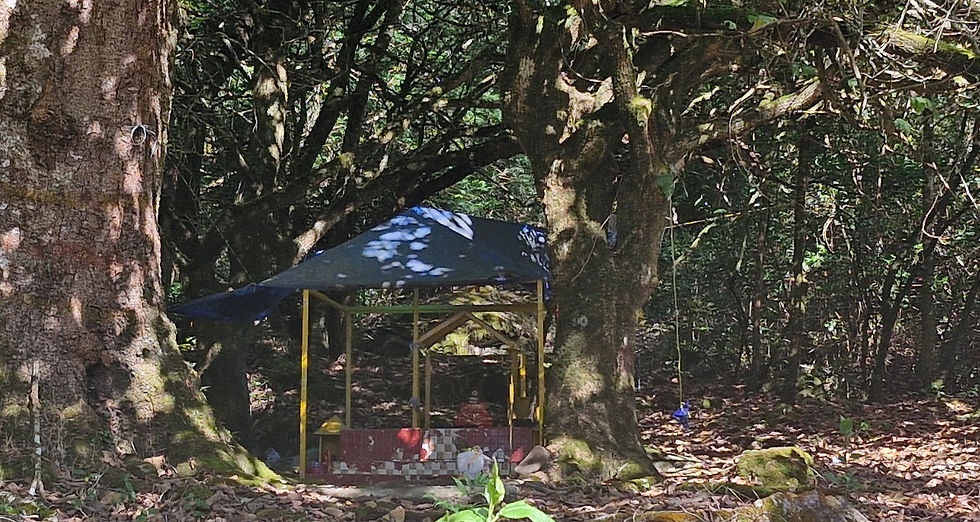
The walk in the early morning sun was warming and I espied, hidden in the trees, a shrine erected by the local people in reverence of nature. It’s a shame some visitors did not show the same respect as I picked up discarded sweet papers and plastic bottles left on the side of the path and put them in the bin as requested.

One evening I was treated to a display of Kalaripayattu, an ancient martial art originating in Kerala. I was pleased to note that this is practiced by both men and women, but is quite dangerous as weapons are used including axes, spears and swords. The skills, agility and flexibility of the artists was jaw-dropping and the conclusion spectacular with stunts using fire. I would advise anyone to see a demonstration as it is unique and very entertaining.

When in Sri Lanka I visited a tea plantation, but it was no harm visiting another whilst in Munnar. The surrounding hills, filled with tea trees, is a stark reminder of the amount of manual labour that goes into producing tea. Women pick the leaves from the trees which are kept at a height so as to facilitate the picking. Carrying loads of up to 20kg on their backs the women negotiate mountainous slopes of at least 45 degrees, some requiring ropes to aid the ascent. The photographs do not show well enough the steepness of the plantations but, believe me, they are incredibly steep. The work is hard and not well paid, so please think of the labour involved when you are enjoying your morning cuppa.

The tour of a tea museum showed how the leaves are processed to make the finished product drunk by millions around the world. The machinery on display was pretty basic and the process doesn’t take long involving crushing, drying and in some cases fermentation.

The journey down from the Munnar hills to Thekkady was spectacular. The verdant fields, the lakes and the clear blue sky was breathtaking and a real treat for the eyes.

The tropical climate means an abundance of fruits, vegetables, herbs and spices grow prolifically. Thanks to a 1500s Portuguese explorer, Pedro Alvarez Cabral, who accidentally landed in Brazil on his way to India, the state of Kerala is now home to pineapple plantations, rubber trees and numerous exotic fruit trees including mango, papaya and coconut. I hadn’t seen pineapples growing before and learned that the plant is about three feet tall and one plant only produces one pineapple. The flowers are beautiful, but unfortunately attract black cobras, so I was quite happy to admire the plants from a distance.

Rubber trees produce about half a litre of sap per day and have a lifespan of 25 years or so. They are then chopped down and the wood is used for furniture or firewood. The tees are easily spotted as a plastic wrap is tied around the trunk to prevent the sap from getting wet.
Rice is an Indian staple and we passed paddy fields where the grain was growing. The paddy owners work as a cooperative buying fertiliser and working together, then selling their produce at auction where there is a fixed minimum price. This seems to be a fair way of doing business and the profits are shared according to the ratio of acres owned.

My senses were further stirred when visiting Green Park Spice Farm near Thekkady. Shown around by a most knowledgeable gentleman, Annas, I learned that turmeric is good for joint pain and general wellbeing, but eating two nutmeg seeds (the size of walnuts) is fatal. I was most interested in the latter as I’m back writing my murder mysteries and have been contemplating how a murderer can encourage a victim to overdose on the spice used to flavour rice pudding! A big thank you to Annas who dug up a ginger root and encouraged me to appreciate the healing powers of herbs and spices. I’ve certainly added turmeric to my daily diet.

The diet in Kerala is very nutritious, even the snacks which are dried fruits, not the highly salted, processed garbage found in too many western supermarkets. Packaged in large plastic bags I tried the dried jackfruit, dried bananas and trial mix which, once again, is better than what I’ve tasted at home. Drinks include coconut water, served in a coconut, and fruit juices without added sugar. I had a pineapple smoothie which was almost creamy, naturally sweet and delicious.

The route from Munnar to Thekkady was one of the most stunningly scenic areas of Kerala I visited, but there was more sights to behold as you will discover in my next blog. Thanks for reading and safe travels.
***
I have visited India three times. To find out more please click on the links.


I mention my stay in Sri Lanka in my blog and to discover more about this beautiful country please click on the following links:


Comments