
Chambers at Large in The Money Museum, Charles Dickens' House and the Post Museum, London
- Amelia Chambers
- Mar 18
- 5 min read
Updated: Apr 15
I grew up in Greater London and therefore had the opportunity to visit the city’s art galleries and museums whenever I wanted. I am well acquainted with the National Gallery, the British Museum, the Science Museum and the Natural History Museum, so when I have a layover in Heathrow I like to explore some of the lesser known museums England’s capital city has to offer.

One such is the Money Museum situated in the heart of the financial district next to the Bank of England. If I have any advice to give my sixteen-year-old self it would be to prioritise a visit to this museum. It reveals a wealth of knowledge (pardon the pun) concerning the history of money and the finances of the Bank of England, where around 400,000 gold bars are stored in the vaults. British currency is no longer based on gold and silver coins but gold is traded widely and gold bars, with their distinctive shape and markings, weigh 400 troy ounces (13kg).

A gold bar is on display and visitors are invited to lift it. This little exercise encouraged me to question the verisimilitude of many heist movies. Lifting one was difficult. Lifting crates of gold bars would need a very sturdy fork lift.
No gold has ever been stolen from the Bank of England but in 1836 a sewer worker discovered an old drain underneath the vaults and gained entrance. He was honest, alerted the directors of his find and received a reward of £800 (about £80,000 in today’s money). This would have meant he could live very comfortably indeed as the average wage of a labourer would have been £20 to £40 a year.

To my surprise I learned that the bank was one of the first financial institutions to employ women as far back as 1893, however there were stipulations. Women had to be single or widowed and were employed to count notes or be typists. The rules changed after World War II and today 30% of senior management are women.

One of the vagaries of nearing seventy is that some of the exhibits on display in museums were once a daily part of my early years. The stamps and letter boxes at the Postal Museum were such exhibits, prompting me to check my own stamp collection. However, I’m not old enough to remember horse drawn carriages delivering the post, nor the use of the first stamp, the Penny Black.

I do recall post being delivered twice a day, once in the morning and again in the afternoon and the service being seven days a week. I also recall telegrams, (sent by telegraph and delivered by men on motorbikes), but I never sent one, it being expensive and unnecessary. I did write numerous letters to family and friends around the globe and eagerly awaited a reply, which could take several weeks, depending on the correspondent.

A faster means of corresponding abroad was by airmail. Letters were written on a thin blue piece of paper which folded into an envelope and would be posted in blue post boxes. I don’t recall ever seeing one of those, but I did write letters using airmail.

From the very beginning postmen and women were issued with a bright uniform so it was easy for bosses to spot any workers idling in the pub! And post boxes, a feature on many street corners, were initially green, but later red as it was easier for them to be seen in the countryside.

One of the highlights of the Postal Museum is taking a trip on the underground train that was used to transport letters and packages across London. The short train ride is a little cramped, but is a reminder of the arduous work postal workers endured working a whole shift underground loading and unloading bags of parcels and letters from the trains. Pay however must have been good as within a few months of working one young man was able to buy a car.
Having learned a great deal about money and the post my final stop was to Charles Dickens’ House in Bloomsbury/Clerkenwell.

I’ve read many of Dickens’ works but cannot say I am a fan of the man, mainly due his decision to leave his wife, who bore him 10 children, and pursue a relationship with a woman 27 years younger than himself. However, the house in 48 Doughty Street is where he lived with his wife and where two of his children were born.

He lived here early in his career, finishing his first novel The Pickwick Papers, then writing Oliver Twist and Nicholas Nickleby.

The house is where his sister-in-law died suddenly at the age of 17, which deeply affected him as he somewhat idolized her, seeing her as innocent and virtuous, undeserving of death at such a young age. He was only 25, just finding fame and earning good money.

However, I was surprised to learn that Dickens earned more doing his reading tours than he did writing! A lectern is on display in the house from where he read, or more correctly reenacted scenes, from his books. These tours, across the UK and America, earned him millions in today’s money, but were physically exhausting and he paid a heavy toll, dying at the age of 58.

I know Dickens liked to walk through the streets of London and I took a stroll around the back roads of Clerkenwell, which in Dickens’ time was overcrowded and known for its poverty and crime. I walked in his footsteps along Saffron Hill where Dickens witnessed pickpocketing which he recreated with Fagin’s gang of boys in Oliver Twist. I found the One Tun Public House which was patronised by Dickens and featured in Oliver Twist under the name The Three Cripples. The tun refers to the largest of the casks used for storing beer and wine.

Visiting these three museums opened my eyes to life in London in years gone by. I learned a great deal, and I’ve shared a few snippets with you, but I’d recommend visiting yourselves. The Money Museum is free of charge, like many of London’s museums and art galleries, but there is an entrance fee for the Postal Museum and the Dickens’ Museum. However, I could see where the money is being spent as the upkeep and maintenance of both is obviously high.
Thanks for reading, and safe travels!
***
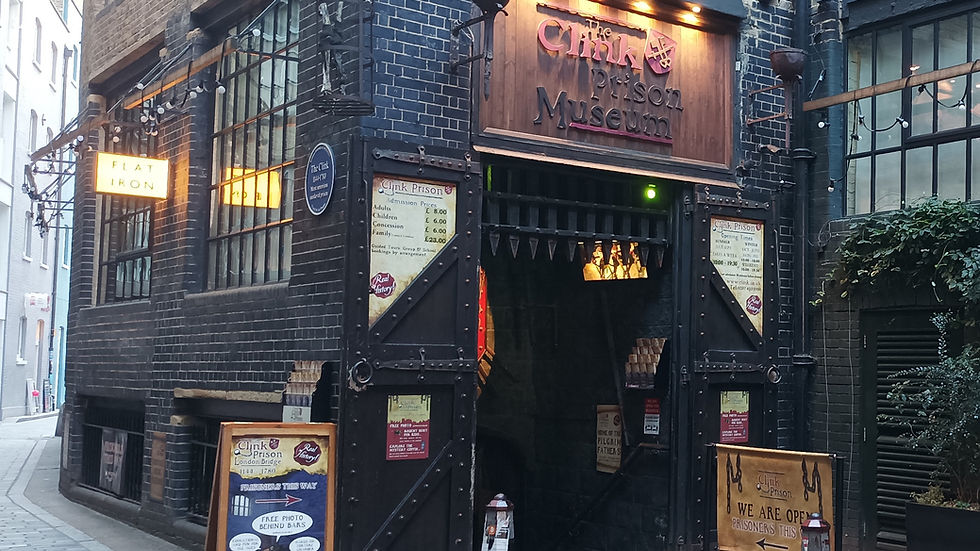
Another quirky museum in London is The Clink – the remains of a prison with some macabre stories of its inmates. I followed that visit with a trip to 221b Baker Street, the home of Sherlock Holmes. You can read about my discoveries by clicking on this link:
The London Transport Museum was really interesting, even if it did feature a bus from 2007, begging me to ask myself: should something so recent be in a museum?
When possible, I visit places to learn about writers. Maria Edgeworth, who lived in Ireland, was more popular in her day than Jane Austen! Click on the link to learn about her and her intellectual family.
Edinburgh has produced a number of writers, including Sir Walter Scott, Robbie Burns, and Robert Louis Stevenson. A museum dedicated to them is in Scotland’s capital. To read more, please click on the link.


Comments